Teaching Focus
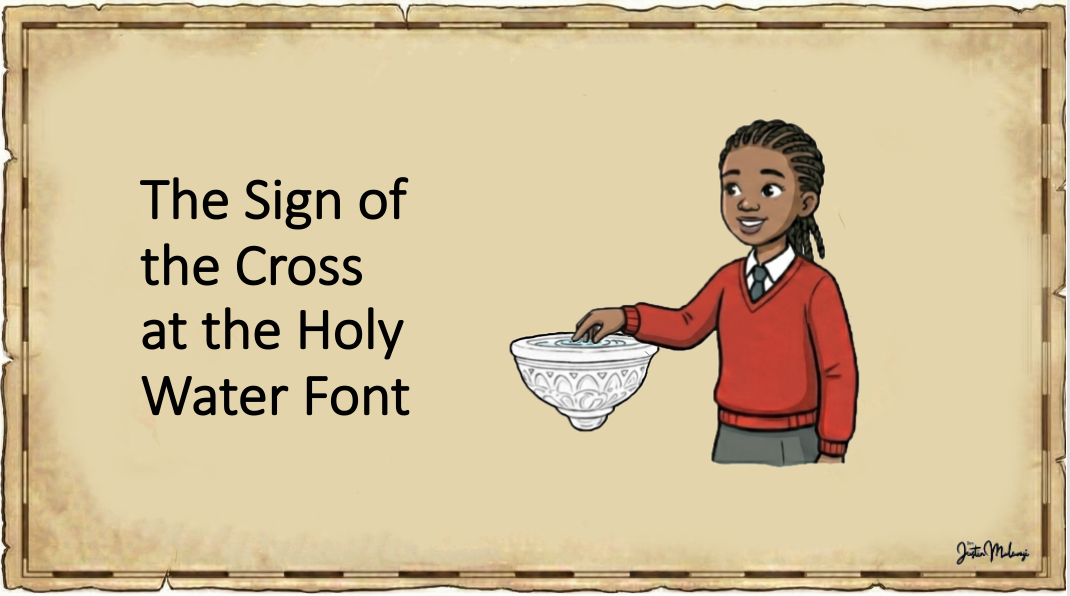
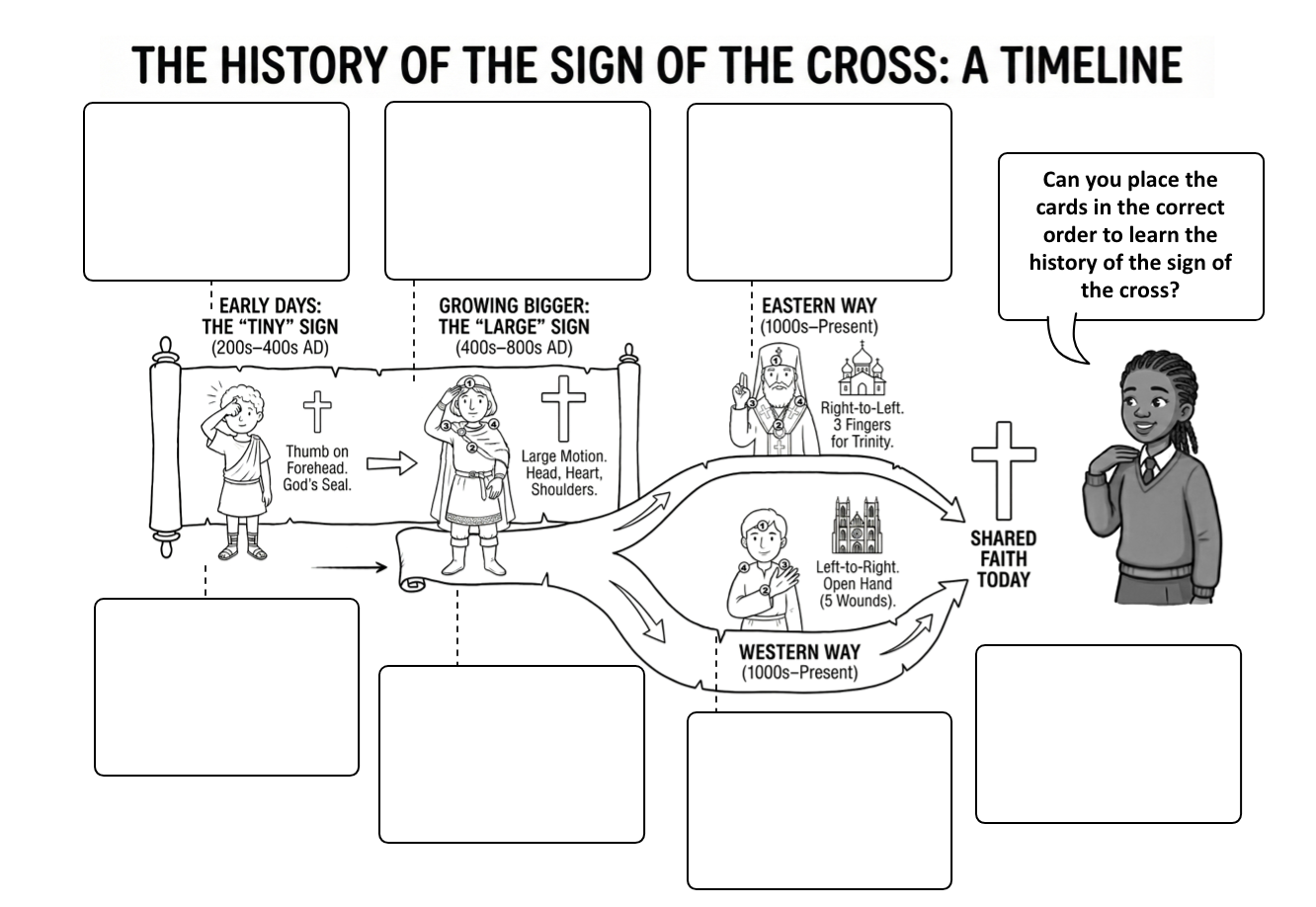
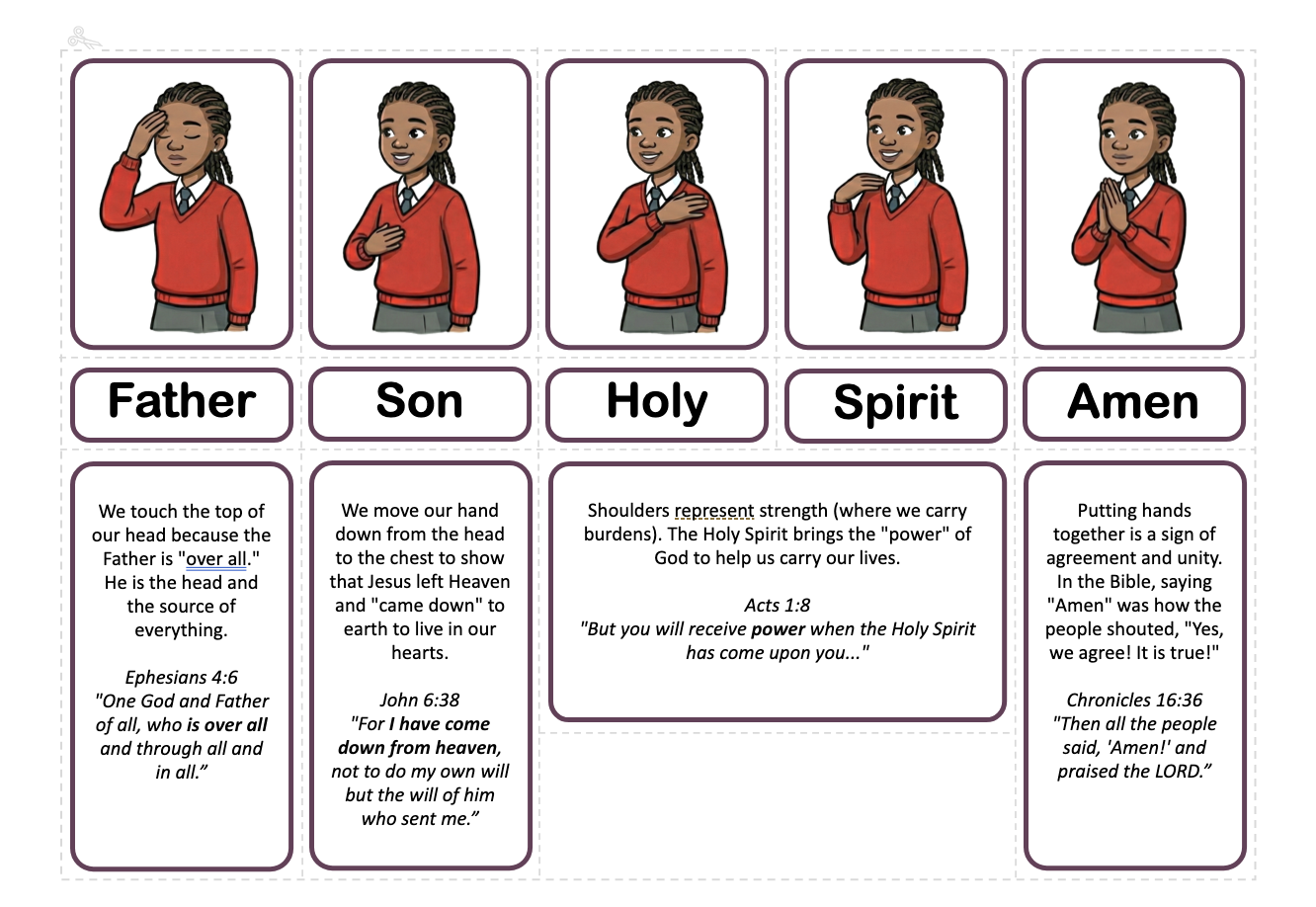
The key goal for this age group (Key Stage 3) is to bridge ritual with spiritual agency: the Holy Water Font should be presented as a conscious renewal of the Baptismal priesthood, empowering students to participate in the liturgy rather than just attend it. The Sign of the Cross moves beyond a prayerful gesture to become a ‘Creed in motion’—a physical profession of belief in the Trinity and the Paschal Mystery. Teachers should address the ‘why’ behind the tradition (history and theology), moving students away from habit towards an understanding of Sacramentals as sacred signs that prepare us to receive grace.
Progression
The goal for ages 12–14 is to move students from internalisation to ownership. Success at this stage means the student understands the Theology of the Body inherent in the gesture—that physical actions impact the soul. They should be able to explain the connection between the Font (the entrance) and the Altar (the destination), recognising that blessing themselves is a necessary ‘spiritual transition’ that separates the secular world from the sacred, quieting the mind to encounter Christ in the Eucharist.
Living the Catholic Values
These sacramentals should be taught as tools for counter-cultural witness and integration. The Sign of the Cross serves as a public declaration of identity in a secular world, requiring courage to perform in public settings (like restaurants). The Holy Water Font teaches the discipline of recollection—the ability to consciously gather one’s scattered thoughts and anxieties and surrender them to God, reinforcing that their faith is not compartmentalised to Sunday, but is an identity they ‘put on’ and carry out the door.