
The Onani Literacy Initiative
[caption id="attachment_2296" align="alignnone" width="1108"]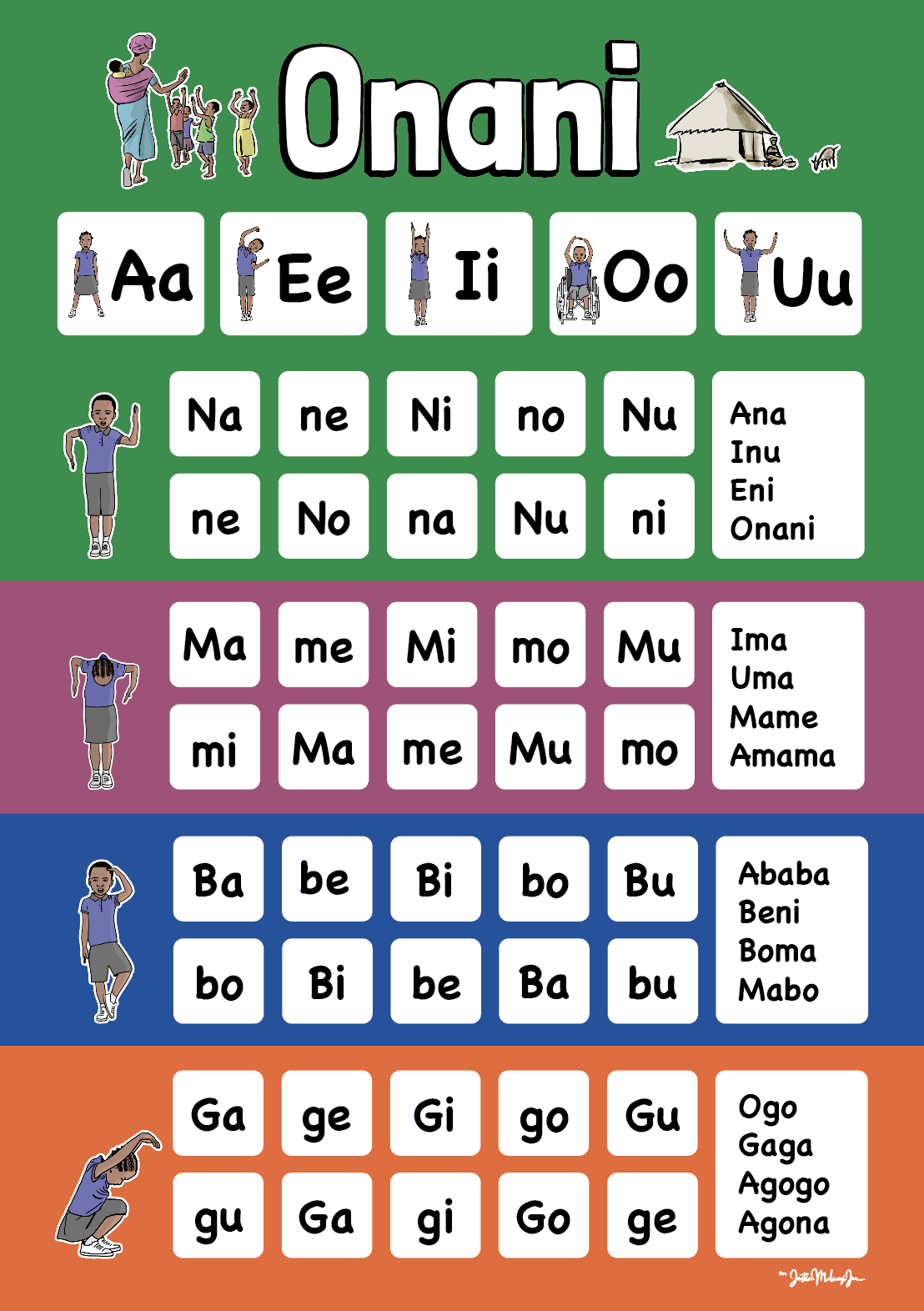 Teaching poster[/caption]
[caption id="attachment_2302" align="alignnone" width="872"]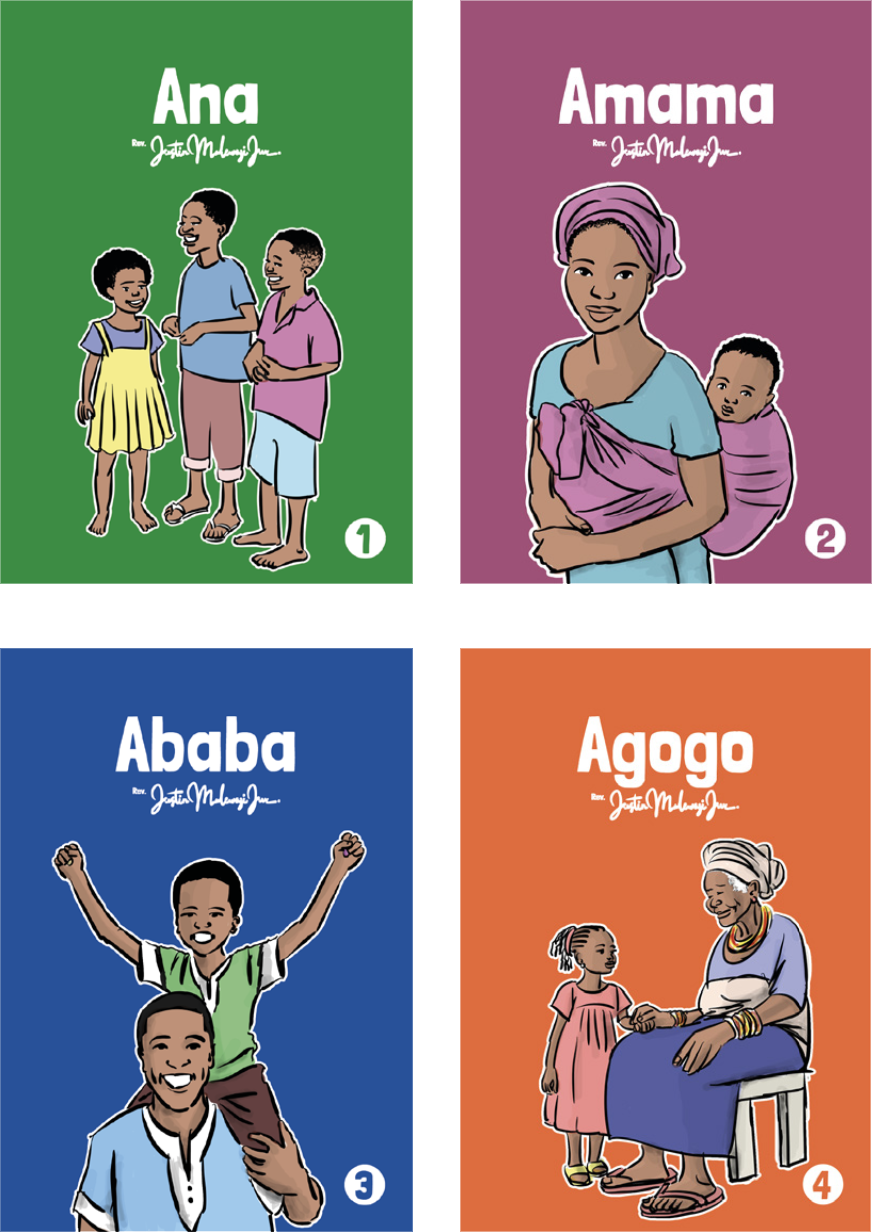 Series of 4 Books[/caption]
Preserving Heritage. Unlocking Potential. Changing Lives.
My name is Rev. Dcn. Justin Malewezi Jnr., and I believe every child in Malawi deserves the tools to build their own future. My mission is simple:
I want to help children learn to read in their own language, give them access to modern technology, and ensure they are protected by the law. We are not just handing out books; we are building a new way for children to learn, create, and grow.
Why This Matters: The Evidence
We are facing a quiet crisis in Malawi, and the data tells a stark story:
- The Reading Gap: According to the World Bank, “Learning Poverty” in Malawi is at 87%. This means nearly 9 out of 10 ten-year-olds cannot read and understand a simple story.
- The Economic Cost: The Human Capital Index estimates that a child born in Malawi today will be only 41% as productive as they could be with full education. We are losing potential before it even develops.
- The Digital Gap: While the world moves forward with AI and coding, many of our rural children lack access to basic digital tools, widening the inequality gap.
I started this initiative to change these statistics.
The Evolution: From Pilot to Scale (2020–Present)
The Onani Literacy Kit is not a theoretical concept; it is the result of years of field testing and iteration in rural Malawi, originally developed under my “Mphanje” pilot programme. Before launching the full initiative, I stress-tested the methodology in 2020 through three key trials:
1. Proof of Simplicity: The “Child-to-Child” Model
In a pilot study, I trained a 12-year-old student named Shalom to use the initial resources to teach four-year-olds in her community. The results were immediate: all three children mastered the letter “A” and basic writing skills within a short timeframe.
The Insight: This confirmed a core hypothesis: the curriculum is so intuitive that even a child can teach it.
2. Proof of Speed: The Bunda Village Catch-Up
In the village of Bunda, I gave community volunteers a brief training session before they led “catch-up” lessons for local children. Despite the minimal preparation time, the majority of the class successfully learnt to read and write the word “Ana” (Children).
The Insight: This demonstrated the project’s “turn-key” potential—it does not require highly specialised teachers to be effective.
3. Proof of Engagement: The “Point at A” Gamification
To ensure retention, I pioneered active learning techniques. In the “Point at A” trials, children played a game singing, “Search and search for the letter A, when you find it, point at it.”
The Insight: This gamification proved that literacy retention improves significantly when abstract lessons are converted into physical play. These pilots laid the solid groundwork for the current, fully scalable Onani system.
The Solution: Scalable Early Literacy Kits
Building on those pilots, I developed the Onani Literacy Kit—a simple, low-cost set of tools designed for mass adoption.
How it works: We use a proprietary phonetic system (using the letters A, E, I, O, U, N, M, B, and G) to unlock reading quickly in Chichewa.
The Result: By the end of the course, every child owns four storybooks that they can actually read.
The Impact: We turn passive students into active readers, fostering ownership of their language and culture from the very start.
Bringing Tech to the Village: The Wire Car Project
We don’t need to wait for expensive laboratories to teach modern skills. Malawian children are already incredibly creative—building complex toy cars out of scrap wire. I thought: Why not combine that traditional skill with computer coding?
I worked with a young boy named Peterson. Instead of giving him a plastic toy, I taught him how to wire his scrap car with programmable chips. He didn’t just play; he engineered. This is the future of education—taking the cultural knowledge children already have and adding the technology they need to succeed.
Protecting Our Children: Changing the Law
My work isn’t just in the classroom; it’s also in the courtroom. Education cannot happen if children are not safe. Recognising a gap in the law, I organised a delegation of Malawian government officials to visit the UK. Partnering with Edge Hill University, we studied best practices for child welfare.
This collaboration was instrumental in the drafting and implementation of the Child Care, Protection and Justice Act in Malawi. Today, this law provides the legal framework that protects millions of children from exploitation.
The Big Vision: The Onani Research Centre
I am now working to establish the Onani Education Research Centre. We need to know exactly what works so we can inform national policy. The Centre will gather data to prove that indigenous-language instruction and practical tech are the best ways forward. My goal is to use this evidence to influence the Ministry of Education and scale these solutions across the country.
How You Can Help
I am looking for partners who share this vision.
Donate: Just £10 pays for a full Literacy Kit (4 books + a teaching poster) for one child.
Partner: If you are an educator, a tech expert, or a funder who wants to help us build the Research Centre, I would love to talk to you.
[Button: Contact Me] [Button: Donate Today]